
Introduction
As fuel prices continue to rise, industries are increasingly looking for ways to improve operational efficiency and reduce energy consumption. One of the most effective solutions is investing in an energy-efficient steam boiler. Modern steam boiler systems are designed to generate maximum steam output while minimizing fuel usage, helping businesses lower operating costs and enhance overall productivity.
Whether used in textile manufacturing, food processing, commercial kitchens, or industrial production facilities, an efficient steam boiler can significantly impact both performance and profitability.
Why Steam Boiler Efficiency Matters
The efficiency of a steam boiler directly affects fuel consumption, production costs, and equipment performance. An inefficient boiler wastes energy, increases operating expenses, and can lead to inconsistent steam generation. On the other hand, a well-designed and properly maintained boiler helps industries achieve reliable operations while reducing unnecessary fuel expenditure.
Key Advantages of an Energy-Efficient Steam Boiler
- Lower Fuel Consumption
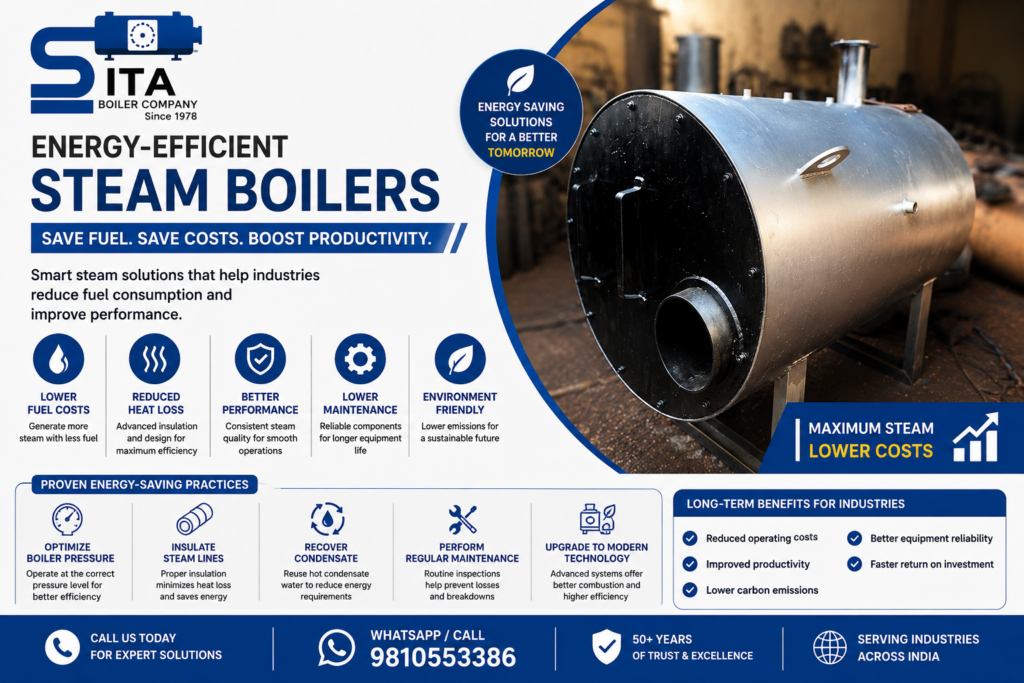
Modern steam boilers are engineered to maximize heat transfer, allowing industries to generate more steam with less fuel.
- Reduced Heat Loss
Advanced insulation and optimized system design help retain heat, improving overall energy utilization.
- Better Steam Quality
Consistent steam pressure and temperature support smoother industrial processes and improved product quality.
- Lower Maintenance Requirements
Efficient boilers experience less strain on critical components, reducing maintenance costs and downtime.
- Environmentally Responsible Operations
Reduced fuel usage leads to lower emissions, helping industries move toward more sustainable operations.
Proven Energy-Saving Practices for Steam Boilers
- Maintain Optimal Boiler Pressure
Operating a steam boiler at the correct pressure level ensures efficient steam generation and prevents excess fuel consumption.
- Insulate Steam Distribution Systems
Proper insulation of steam pipes, valves, and fittings minimizes heat loss and improves system efficiency.
- Recover and Reuse Condensate
Condensate recovery systems return hot water to the boiler, reducing the energy required to generate steam and lowering fuel costs.
- Schedule Preventive Maintenance
Regular inspections and maintenance help identify inefficiencies early, ensuring the boiler operates at peak performance.
- Upgrade to Advanced Boiler Technology
Modern steam boiler systems incorporate improved combustion controls, enhanced heat recovery, and higher efficiency ratings, delivering long-term energy savings.
Long-Term Benefits for Industrial Facilities
Organizations that invest in energy-efficient steam boiler solutions often experience:
- Reduced fuel and operating costs
- Improved production efficiency
- Lower carbon emissions
- Increased equipment reliability
- Enhanced process consistency
- Faster return on investment
Conclusion
An energy-efficient steam boiler is more than just a piece of equipment—it is a strategic investment in cost savings, operational reliability, and sustainable growth. By implementing energy-saving practices and adopting modern boiler technology, industries can significantly reduce fuel expenses while maintaining high levels of productivity and performance.
Frequently Asked Questions
- 1. What makes a steam boiler energy efficient?
Energy-efficient steam boilers utilize advanced combustion systems, improved heat transfer technology, and reduced heat losses to maximize performance while minimizing fuel consumption.
- 2. How can a steam boiler help reduce fuel costs?
An efficient boiler generates the required amount of steam using less fuel, resulting in lower energy bills and operating expenses.
- 3. Why is regular boiler maintenance important?
Routine maintenance helps maintain efficiency, improves safety, prevents breakdowns, and extends the lifespan of the boiler system.
- 4. What is condensate recovery and why is it important?
Condensate recovery involves collecting and reusing hot condensate water, reducing the energy needed to heat fresh water and improving overall efficiency.
- 5. When should an industrial steam boiler be upgraded?
If your boiler experiences frequent breakdowns, rising fuel costs, excessive maintenance requirements, or declining performance, it may be time to consider an upgrade.